Keynote Speakers of MICAD 2026

Prof. Penny Gowland
University of Nottingham, UK
Penny Gowland is an MRI physicist at the Sir Peter Mansfield Imaging Centre at the University of Nottingham. She develops quantitative MRI as a physiological measurement tool and with collaborators use it to create new knowledge in biomedicine, and experimental medicine across multiple organ systems including the brain, gastrointestinal tract, and placenta.
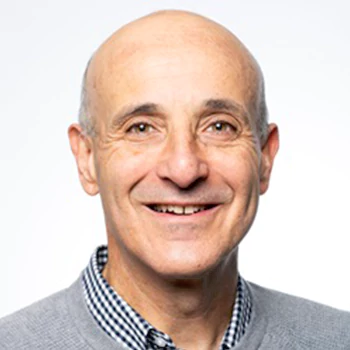
Prof. Vicente Grau
Oxford University, UK
Vicente Grau is a Professor of Biomedical Image Analysis at the Institute of Biomedical
Engineering (IBME), Department of Engineering Science, University of Oxford, and a
Professorial Fellow in Engineering at Mansfield College. Vicente holds a PhD in medical
image analysis from Universidad Politécnica de Valencia, Spain. After spending two years at
Brigham and Women’s Hospital, Harvard University, and the ONH Biomechanics Lab at LSU Health
Sciences Center, he joined the University of Oxford in 2004. He was awarded the title of
Professor in 2015.
Vicente’s research focuses on the development of artificial intelligence (AI)-enabled
methods to improve the understanding of human anatomy and physiology and to provide
solutions for healthcare. He is particularly interested in combining medical images with
other information sources to build multimodal algorithms, as well as leveraging large
databases for population-level studies. His research spans multiple clinical applications,
with a special interest in cardiovascular medicine.
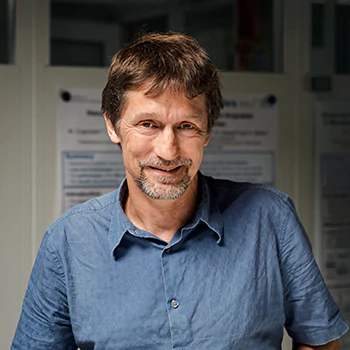
Prof. Henning Müller
University of Geneva, Switzerland
Henning Müller studied medical informatics at the University of Heidelberg, Germany, then worked at Daimler-Benz research in Portland, OR, USA. From 1998-2002 he worked on his PhD degree in computer vision at the University of Geneva, Switzerland with a research stay at Monash University, Melbourne, Australia. Since 2002, Henning has been working for the medical informatics service at the University Hospital of Geneva. Since 2007, he has been a full professor at the HES-SO Valais and since 2011 he is responsible for the eHealth unit of the school. Since 2014, he is also professor at the medical faculty of the University of Geneva. In 2015/2016 he was on sabbatical at the Martinos Center, part of Harvard Medical School in Boston, MA, USA to focus on research activities. Henning was coordinator of the ExaMode and Khresmoi EU projects, scientific coordinator of the VISCERAL EU project. Since early 2020 he is also a member of the Swiss National Research Council where is leading the Program Committee on Thematic and Solution Oriented Research since 2025.
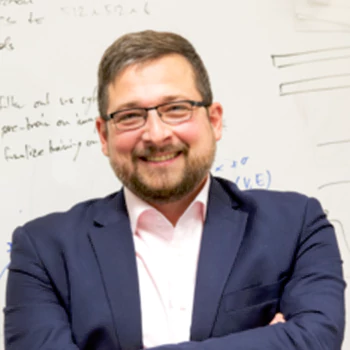
Prof. Bernhard Kainz
Imperial College London, UK
Prof. Bernhard Kainz is a Professor in the Department of Computing at Imperial College
London. He leads the Human-in-the-Loop Computing Group and is one of four academics
heading
the Biomedical Image Analysis (BioMedIA) Lab. His research in human-in-the-loop
computing
focuses on integrating human intelligence with machine capabilities, and enhancing
machine
intelligence with human adaptability.
He collaborates closely with Imperial College Healthcare NHS Trust, King’s College
London
(Division of Imaging Sciences and Biomedical Engineering), St. Thomas’ Hospital London,
and
the Department of Bioengineering at Imperial College London. He serves as an Associate
Editor for IEEE Transactions on Medical Imaging, Medical Image Analysis, and Machine
Learning for Biomedical Imaging. In addition, he is a scientific adviser to ThinkSono
Ltd
and Ultromics Ltd, and a co-founder of Fraiya Ltd. He also serves as a stream lead for
the
EPSRC Centre for Doctoral Training in Smart Medical Imaging and the UKRI Centre for
Doctoral
Training in Artificial Intelligence for Healthcare.
His teaching focuses on real-time computing, deep learning, image analysis, and visual
information processing.
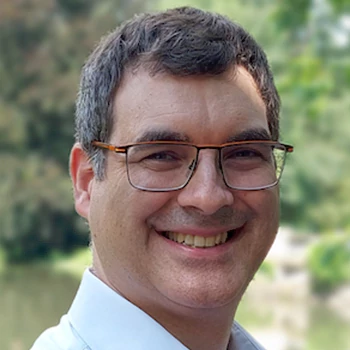
Prof. Nicolas Padoy
University of Strasbourg, France
Nicolas Padoy is a Professor of Computer Science at the University of Strasbourg, France, and the Scientific Director as well as Director of Computer Science and Artificial Intelligence Research at the IHU Strasbourg, a leading institute for minimally invasive surgery. He leads the CAMMA research group (Computational Analysis and Modeling of Medical Activities), which focuses on leveraging multimodal data from operating rooms with machine learning and computer vision to develop cognitive assistance systems and enhance human-machine collaboration. His research aims to improve the safety, quality, and efficiency of surgical procedures. In 2020, Nicolas Padoy was awarded a national AI Chair by the Agence Nationale de la Recherche (ANR) for his project AI4ORSafety and, in 2023, a prestigious European ERC Consolidator Grant for his project CompSURG. He was elected MICCAI Fellow in 2024 and served as General Chair of the international IPCAI conference from 2023 to 2025. Nicolas Padoy completed his PhD in 2010 jointly between the Technical University of Munich, Germany, and INRIA/University Henri Poincaré, France. Subsequently, he was a postdoctoral researcher and later an Assistant Research Professor in the Laboratory for Computational Interactions and Robotics at the Johns Hopkins University, USA.

Prof. Clarisa Sánchez Gutiérrez
University of Amsterdam, Netherlands
Clarisa, as full Professor of AI and Health at the University of Amsterdam, is deeply committed to advancing patient care through responsible AI technologies in healthcare. At the university, she holds positions at the Faculty of Science (IvI) and Amsterdam UMC (BMEP), fostering an interdisciplinary environment. In 2020, she co-founded the Quantitative Healthcare Analysis (qurAI) group, comprising over 20 PhD students and postdocs, dedicated to developing, validating, and integrating AI solutions for medical data challenges along the patient pathway. Her team focuses on cutting-edge technologies like generative AI, vision transformers, and self-supervised learning, while also prioritizing trustworthy AI aspects like interpretability and uncertainty estimation for medical data. Furthermore, Clarisa actively translates research outcomes into clinical applications, contributing to the global deployment of various software products. Notably, she co-invented CAD4TB, a CE certified AI software for TB screening operational in over 45 countries. Additionally, her group collaborates on the development of grand-challenge, an end-to-end platform for biomedical image analysis. Her multifaceted contributions underscore her commitment to advancing AI in healthcare and fostering collaboration across disciplines and sectors.

Prof. Emanuele Trucco
University of Dundee, UK
Emanuele (Manuel) Trucco, MSc, PhD, FRSA, FIAPR, FBMVA, is the NRP Chair of
Computational
Vision in Computing, School of Science and Engineering, at the University of Dundee, an
Honorary Clinical Researcher of NHS Tayside, and a former Adjunct Professor at the
Chinese
Academy of Sciences. He was co-founder, NEX and scientific advisor for the spinout Eye
to
the Future.
He has been active since 1984 in computer vision, and since 2002 in medical image
analysis,
publishing more than 300 refereed papers and 2 textbooks. his research has been funded
by
UKRI (EPSRC, MRC), the EU, charities (incl. Royal Society, Wellcome Trust, Leverhulme)
and
industry (incl. Canon, Astra Zeneca, Lilly, OPTOS, British Aerospace). Manuel has served
on
the organizing or program committee of major international and UK conferences, including
three times Program Chair for the British Machine Vision Conference, and co-General
Chair
for ECCV2020 (online, ~4,600 delegates). At MICCAI, Manuel has served as co-chair of
several
editions of the OMIA workshop (since 2015), Area Chair, and invited speaker at workshops
(LABELS, CARE). Manuel is co-director of VAMPIRE (Vessel Assessment and Measurement
Platform
for Images of the Retina), an international research initiative led by the Universities
of
Dundee and Edinburgh (co-director Dr Tom MacGillivray), part of the UK Biobank Eye and
Vision Consortium and of the Healthcare Data Research UK Scottish Institute. VAMPIRE
software is being used around the world in biomarker studies on cardiovascular risk,
stroke,
dementia, diabetes and complications, cognitive performance, neurodegenerative diseases,
and
genetics.
Speech Title: Mining collections of retinal images and data for biomarkers of systemic diseases: the VAMPIRE project.
Aabstract: VAMPIRE (Vessel Assessment and Measurement Platform for Images of the REtina) is a research initiative created and led by the Universities of Dundee and Edinburgh. During the last ~20 years, with sustained UK and international funding, VAMPIRE has created clinically motivated software tools for retinal image and data analysis, that have enabled research on retinal biomarkers for systemic conditions in many clinical groups internationally, including dementias, cardiovascular disease and complications of diabetes, cognitive performance, neurodegenerative diseases, and genetics. The talk will present briefly some of the computational techniques developed and deployed in healthcare research, the range of clinical projects supported, the challenges that such research entails, and some lessons learnt from our experience in research, translation and commercialization.
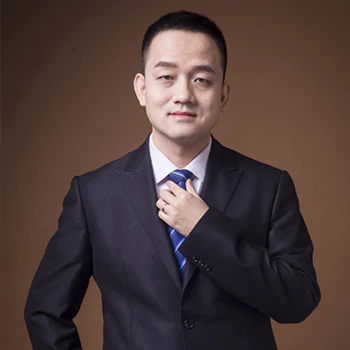
Dr. Daguang Xu
Senior Research Manager, NVIDIA, USA
Dr. Daguang Xu is a Senior Research Manager in Healthcare at NVIDIA, where he leads AI research in healthcare. His work spans medical imaging analysis, multimodal foundation models, and, more recently, physical AI and world models. His team is the primary contributor to the open-source platforms MONAI, and is increasingly focused on releasing open foundation models, and open datasets for generative AI in healthcare. Dr. Xu received the PhD degree from Johns Hopkins University. Before joining NVIDIA, he worked as a research scientist at Siemens Healthineers.
Speech Title: Toward Agentic Healthcare AI: Foundation Models for Perception, Reasoning, and Synthesis
Aabstract: Generative AI is rapidly transforming healthcare by enabling new paradigms for perception, reasoning, reconstruction, and data synthesis across end-to-end clinical workflows. In this talk, I will present recent research advances and open releases from NVIDIA on building healthcare-specific foundation models and curated datasets that support scalable, multimodal, and increasingly agentic AI systems. These efforts span core capabilities including segmentation for perception and annotation, vision–language modeling for interpretation and prediction, image reconstruction, and generative synthesis for simulation and data augmentation—collectively enabling more efficient, robust, and generalizable solutions for real-world clinical and research applications.